"Island-Hopping the Visayas: Which Language Is Spoken Where?"
Published July 8, 2026
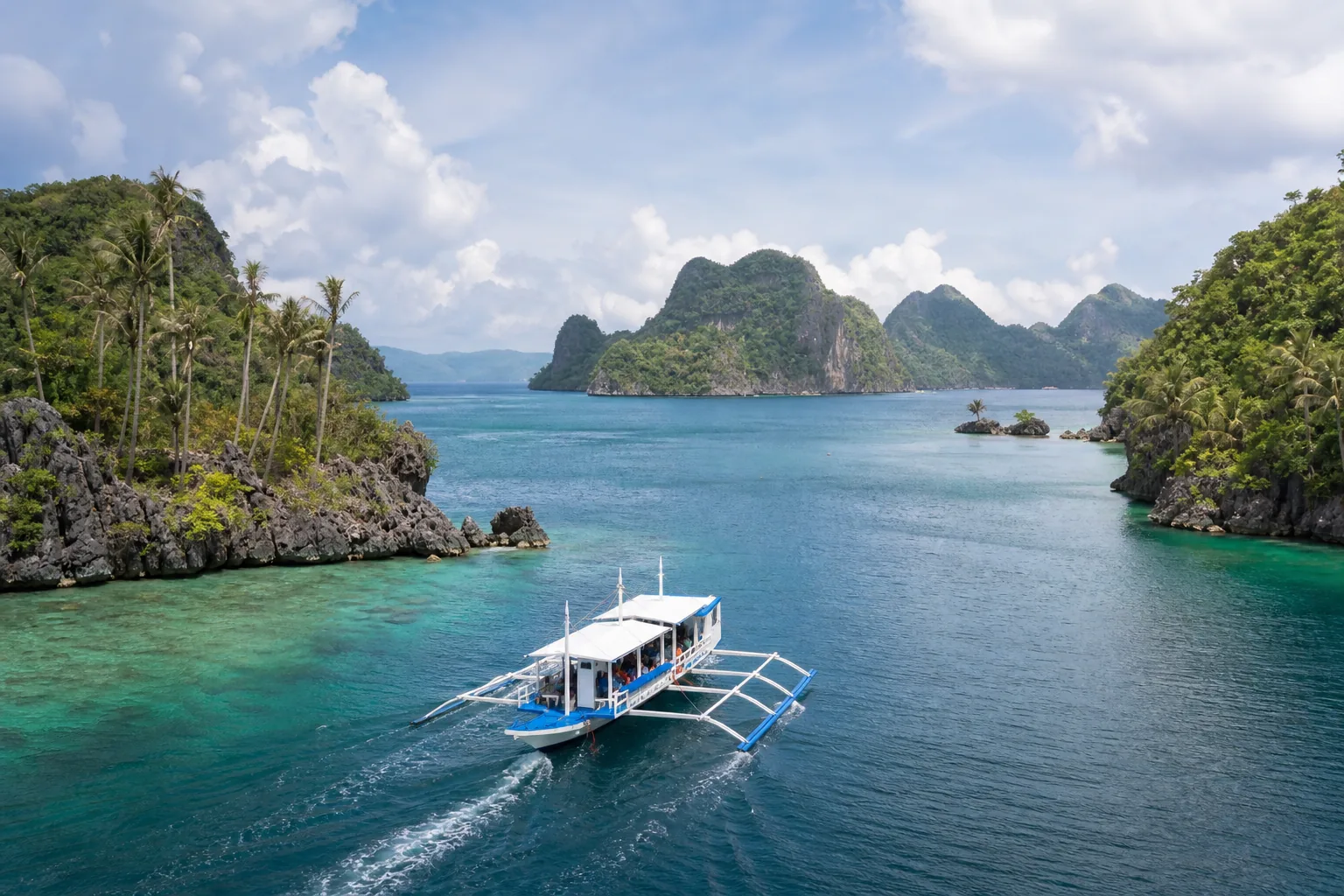
The Visayas — the scatter of islands in the middle of the Philippines — are the country's island-hopping heartland: Cebu, Bohol, Boracay, Siquijor, and a hundred lesser-known sandbars in between. Travelers often board the ferry assuming "Visayan" is one language. It isn't. The Visayas speak several distinct languages, and knowing which is which makes you a sharper, warmer traveler.
Here's the map, island by island.
Central Visayas: Cebuano country
Cebu, Bohol, Siquijor, Negros Oriental (Dumaguete)
This is the homeland of Cebuano, the largest Visayan language — called Bisaya or Binisaya by its speakers, with roughly 20 million across the Visayas and Mindanao.
- Cebu — the mother island of the language. Everything in our first-timer's guide to Cebu applies.
- Bohol — Chocolate Hills, tarsiers in Corella, the Loboc River, and the beaches of Panglao and Anda. Boholanos speak a distinctive Cebuano dialect: listen for a j sound where Cebu says y — maayo ("good") becomes maajo. It's a badge of identity, and Bohol is proud of it.
- Siquijor — the "mystic island" of healers and Cambugahay Falls speaks Cebuano.
- Dumaguete & Negros Oriental — university town, sunset boulevard, and the turtle-rich reef of Apo Island: Cebuano-speaking, with Hiligaynon just over the mountains.
Try: Maayong buntag! (good morning), Salamat! (thanks), Lami! (delicious).
Western Visayas: Hiligaynon and friends
Iloilo, Bacolod (Negros Occidental), Guimaras, Aklan & Boracay, Antique, Capiz
Cross to Panay and Negros Occidental and the language changes completely:
- Hiligaynon (Ilonggo) — the melodic language of Iloilo and Bacolod, famous for its sing-song intonation and the endearment particle gid. "Delicious" isn't lami here — it's namit. "Thank you" is salamat (that one travels everywhere).
- Aklanon — spoken in Aklan province, the gateway to Boracay. On Boracay itself you'll hear Aklanon, Hiligaynon, Tagalog, and English all in one beach bar.
- Kinaray-a — the language of Antique and inland Panay.
These are cousins of Cebuano — related, sharing a lot of vocabulary, but not mutually intelligible in casual speech. A Cebuano and an Ilonggo will typically switch to Tagalog or English with each other.
Eastern Visayas: Waray, with a Cebuano south
Samar, Leyte, Biliran
- Waray-Waray dominates Samar and northern/eastern Leyte, including Tacloban. Waray has a reputation in Filipino pop culture for toughness, but in person it's warm and quick to laugh.
- Western and southern Leyte (Ormoc, Maasin, the ferry towns toward Cebu) speak Cebuano — the language line runs right across the island.
- Don't miss the Kalanggaman sandbar off Palompon and the San Juanico Bridge between Leyte and Samar.
So what do travelers actually do?
Three practical rules:
- English and Filipino work everywhere. Every island schools its children in both. You will never be stranded linguistically in the Visayas.
- Cebuano is the best single Visayan investment. It covers Cebu, Bohol, Siquijor, Dumaguete, southern Leyte — plus Davao, Cagayan de Oro, and most of Mindanao if your trip continues south. Start with 60+ essential phrases and the numbers.
- Learn "thank you" and "delicious" per island. Salamat is universal; swap lami (Cebuano) for namit (Hiligaynon) as you cross the strait and watch faces light up.
Wherever the ferry drops you, the habit that matters is the same: hear a word, look it up, use it the same day. Our Cebuano–English dictionary holds nearly 7,000 words — each with its English meaning and its original Cebuano definition — and it works beautifully on a beach with one bar of signal. Padayon!