60+ Basic Cebuano Phrases Every Traveler Should Know
Published July 18, 2026
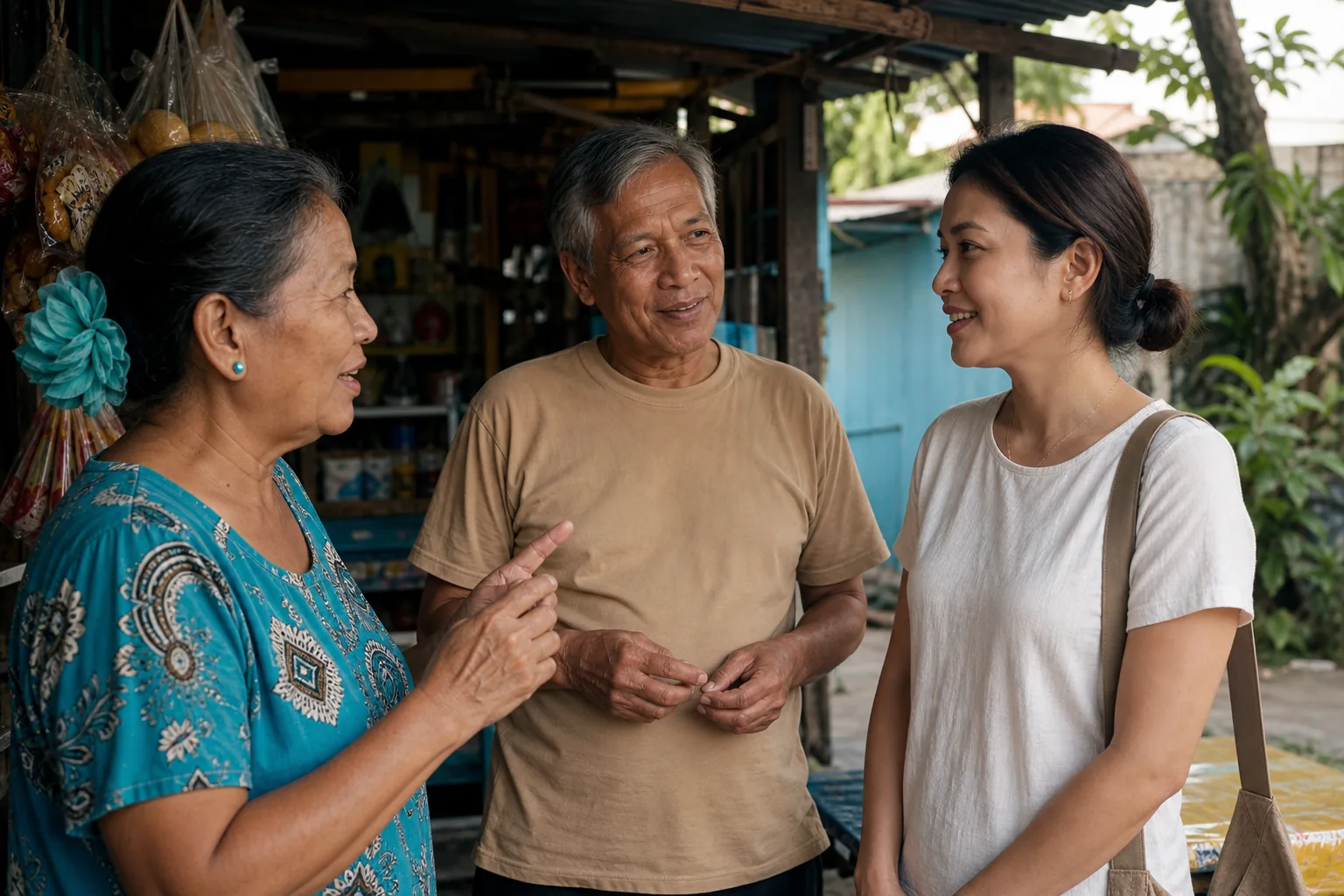
If you're heading to Cebu, Bohol, Dumaguete, Siquijor, or most of Mindanao, the language you'll hear on the street is Cebuano — locals usually just call it Bisaya. English is widely understood in the Philippines, but even a handful of Bisaya phrases changes how people treat you: prices get friendlier, smiles get bigger, and strangers start helping you like family.
Here are the phrases that actually get used, grouped by situation.
Greetings and courtesy
| Cebuano | English |
|---|---|
| Maayong buntag | Good morning |
| Maayong hapon | Good afternoon |
| Maayong gabii | Good evening |
| Kumusta ka? | How are you? |
| Maayo man ko, salamat | I'm fine, thank you |
| Salamat | Thank you |
| Daghang salamat | Thank you very much |
| Walay sapayan | You're welcome |
| Palihog | Please |
| Pasayloa ko | Forgive me / I'm sorry |
| Amping! | Take care! |
A tip on pronunciation: Cebuano is spoken the way it's spelled. Every vowel is pronounced, stress usually falls on the second-to-last syllable, and there are no silent letters. Salamat is sah-LAH-mat, not "slahmat."
Yes, no, and the two kinds of "no"
Cebuano has two words English speakers keep mixing up:
- Oo (OH-oh) — yes.
- Dili — no / not, for refusing or negating descriptions: Dili ko ("I don't want to / I won't"), dili mahal ("not expensive").
- Wala — none / nothing / didn't happen: Wala koy kuwarta ("I have no money"), Wala ko kasabot ("I don't understand").
If you only remember one sentence from this section, make it "Wala ko kasabot" — I don't understand. Follow it with "Hinay-hinay lang palihog" ("slowly please") and people will happily repeat themselves.
Eating and drinking
Food is the fastest way into any Filipino conversation.
| Cebuano | English |
|---|---|
| Lami! / Lami kaayo! | Delicious! / Very delicious! |
| Gusto ko mokaon | I want to eat |
| Mangaon ta! | Let's eat! (you will hear this) |
| Gutom na ko | I'm hungry |
| Busog na ko | I'm full |
| Tubig, palihog | Water, please |
| Unsa ni? | What is this? |
When someone says Mangaon ta! ("let's eat"), it's often politeness rather than a literal invitation — a warm "Salamat, busog pa ko" ("thanks, I'm still full") is a perfectly good answer.
Don't leave Cebu without trying litson (lechon) — spit-roasted pig, and the island's culinary religion.
Getting around
| Cebuano | English |
|---|---|
| Asa ang CR? | Where is the toilet? ("CR" = comfort room) |
| Asa ni padulong? | Where is this (jeepney/bus) going? |
| Mosakay ko | I'll get on / I'm riding |
| Lugar lang! | "Just here!" — say this to stop a jeepney |
| Sa merkado, palihog | To the market, please |
| Pila ang plete? | How much is the fare? |
Lugar lang is the single most practical phrase on this page. Jeepneys have no bell — you call out lugar lang (or tap a coin on the rail) and the driver pulls over.
Shopping and money
| Cebuano | English |
|---|---|
| Tagpila ni? | How much is this? |
| Mahal ra kaayo! | That's too expensive! |
| Barato ra | That's cheap |
| Mopalit ko ani | I'll buy this |
| Naa kay sukli? | Do you have change? |
Haggling is normal in public markets and with habal-habal (motorbike taxi) drivers — do it with a smile and a palihog, never with irritation.
Compliments and small talk
| Cebuano | English |
|---|---|
| Gwapa kaayo | Very beautiful (for women) |
| Guwapo kaayo | Very handsome (for men) |
| Kuyaw! | Cool! / Awesome! (slang — literally "dangerous") |
| Lingaw kaayo | So much fun |
| Taga-asa ka? | Where are you from? |
| Ako si ___ | I am ___ |
Emergencies
| Cebuano | English |
|---|---|
| Tabang! | Help! |
| Sakit akong tiyan | My stomach hurts |
| Asa ang ospital? | Where is the hospital? |
| Kinahanglan ko og doktor | I need a doctor |
| Naa koy tambal? → Naa kay tambal? | Do you have medicine? |
Keep going
Sixty phrases will carry you through a trip; a vocabulary carries you into friendships. When you hear a word you don't know, look it up in the Cebuano–English dictionary — every entry shows the English meaning and the original Cebuano definition. Start with our guides to Cebuano greetings and counting in Cebuano, or see how Cebuano differs from Tagalog before you fly.