A First-Timer's Guide to Cebu — and the Bisaya You'll Hear
Published July 10, 2026
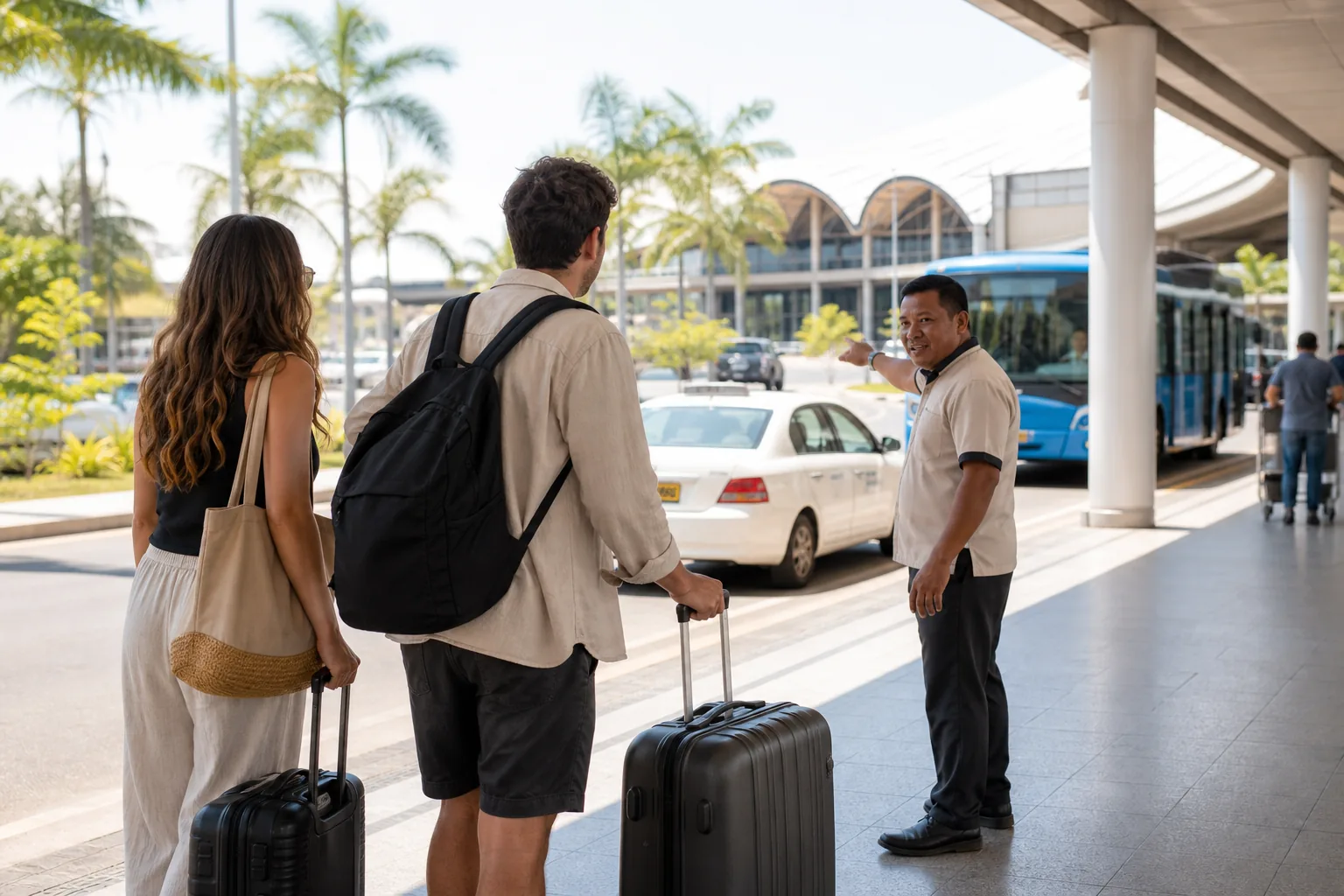
Cebu is the easiest deep-dive into the Philippines: one island with a major international airport, beaches and waterfalls in every direction, the country's best-loved roast pig — and everywhere, the sound of Cebuano (Bisaya). This guide covers the classic first-timer route, with the words you'll actually hear along the way.
Cebu City: two days of history and lechon
The Philippines' oldest city packs its history into a walkable core: the Basilica Minore del Santo Niño, home of the child-Jesus image that anchors the Sinulog festival every third Sunday of January; Magellan's Cross beside it; and the small stone Fort San Pedro by the harbor. For chaos and color, walk Carbon Market — the city's ancient public merkado — then cool off with a sunset at the Tops lookout above Busay.
And eat the litson. Cebu lechon — whole pig roasted over coals, skin like glass — is the island's culinary crown jewel, at its most famous in the towns of Carcar and Talisay. Order a quarter kilo, hear yourself say lami kaayo ("so delicious"), and understand why Cebuanos put it at every celebration.
Words you'll hear: palit (buy), barato (cheap), mahal (expensive), tagpila? (how much?), suroy (to stroll around — suroy-suroy is the Cebuano art of wandering).
The south: Moalboal, Kawasan, and the question of Oslob
Three hours south by bus from the South Bus Terminal (say "Moalboal, palihog" to the conductor):
- Moalboal — the famous sardine run happens meters off Panagsama Beach: millions of fish in a single shifting wall, free to anyone with a snorkel. Sea turtles graze the same reef.
- Kawasan Falls (Badian) — spring-blue water and the Philippines' best canyoneering run: four hours of jumping, sliding, and swimming down Matutinao canyon to the falls.
- Oslob — famous for whale shark watching, and worth a pause: the sharks are hand-fed to keep them near shore, which many marine scientists criticize as harmful to the animals' migration and health. If you'd rather see big animals on their own terms, head north to Malapascua instead.
Words you'll hear: dagat (sea), isla (island), sakay (to ride/board), init (hot), bugnaw (cold — your first Kawasan plunge, summarized).
The north: Bantayan and Malapascua
- Bantayan Island — powder-white sand, sleepy fishing towns, and the Philippines at its most unhurried. Come via Hagnaya port (bus from the North Bus Terminal).
- Malapascua — a tiny island with a world-class claim: thresher sharks at dawn on Monad Shoal, the most reliable place on Earth for divers to see them.
Words you'll hear: langgam means bird in Cebuano — a classic Tagalog false-friend (in Manila it means ant!). Also balay (house), higala (friend), and laag — the beloved Bisaya word for going out roaming with no particular plan.
Getting around like a local
- Jeepneys rule the city. Pay with "Plete, palihog", and shout "Lugar lang!" when you want to get off — the plete (fare) is posted, and change gets passed hand-to-hand through fellow passengers with complete honesty.
- Habal-habal (motorbike taxis) reach anywhere jeepneys don't. Agree on the fare before you sakay.
- Ceres buses run the length of the island from the two terminals; vans (v-hires) are faster and cozier.
- Weather comes in two flavors: init and ulan (rain) — the habagat southwest monsoon brings the wet season around June to November.
A five-phrase survival kit
- Maayong buntag! — Good morning!
- Salamat! — Thank you!
- Tagpila ni? — How much is this?
- Lugar lang! — Stopping here! (jeepney)
- Lami kaayo! — Delicious! (deploy at any lechon stall)
Want the full toolkit before you land? Read the 60+ essential Cebuano phrases and how greetings work in the Visayas — then keep the Cebuano–English dictionary open in a tab for everything else. Planning to island-hop beyond Cebu? Here's which language is spoken on each Visayan island.