"Counting in Cebuano: Numbers 1 to 1,000,000"
Published July 14, 2026
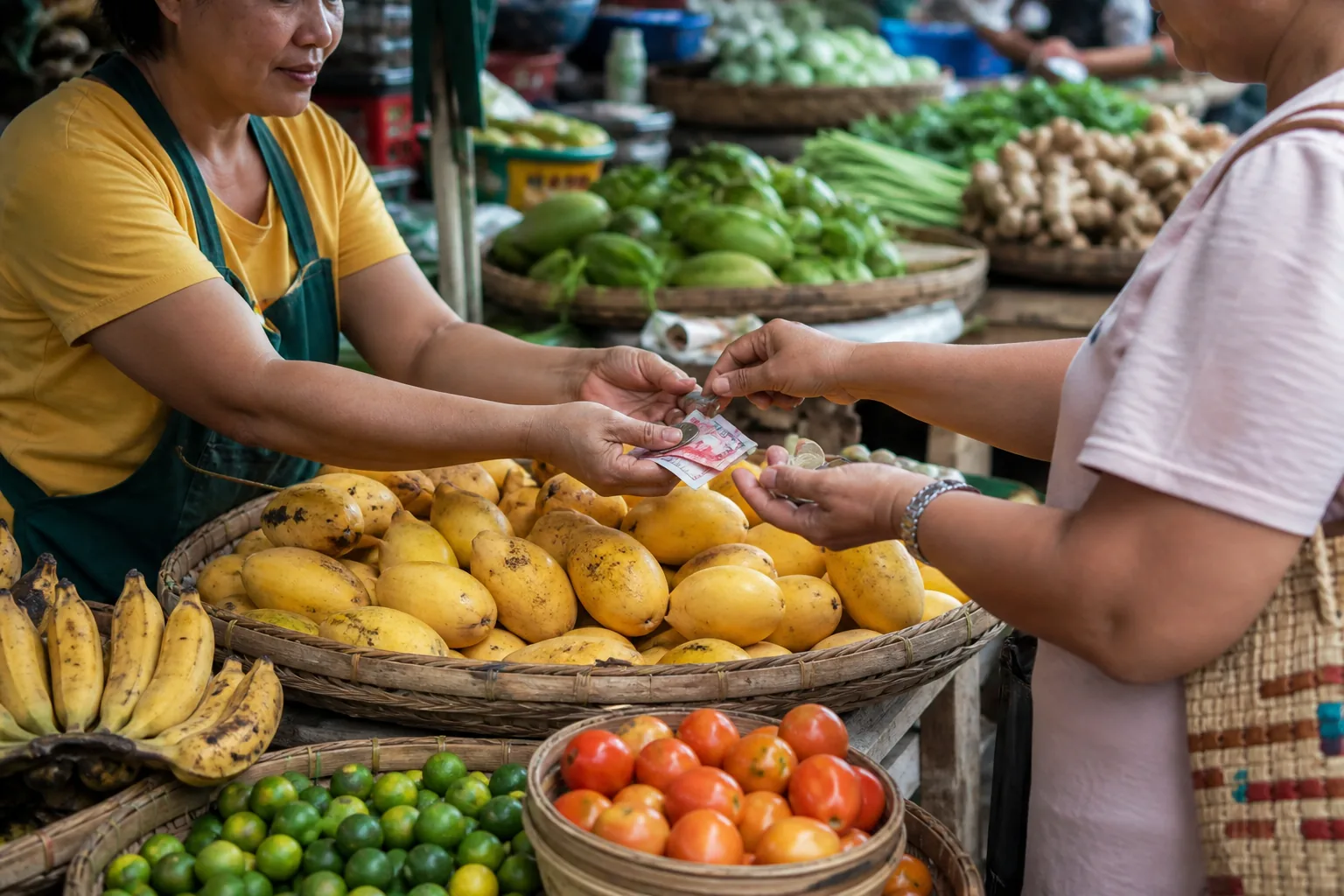
Cebuano has a secret that trips up every learner: it runs on two parallel number systems, and locals switch between them without thinking. Use the wrong one and you'll still be understood — but knowing when each is used is one of the fastest ways to sound natural.
The native Cebuano numbers
These are the indigenous Bisaya numbers, used for counting things, people, and quantities:
| Number | Cebuano |
|---|---|
| 1 | usa |
| 2 | duha |
| 3 | tulo |
| 4 | upat |
| 5 | lima |
| 6 | unom |
| 7 | pito |
| 8 | walo |
| 9 | siyam |
| 10 | napulo |
From eleven, you build on ten with napulog (napulo + og, "ten and"):
- 11 — napulog usa
- 12 — napulog duha
- 15 — napulog lima
The tens have their own names: 20 is kawhaan, 30 katloan, 40 kap-atan, 50 kalim-an, 60 kan-uman, 70 kapitoan, 80 kawaloan, 90 kasiyaman. Combine as you'd expect: 21 is kawhaag usa.
Big numbers use counters with ka:
So 500 is lima ka gatos, and 3,000 is tulo ka libo.
The Spanish-derived numbers
Three centuries of Spanish rule left the Philippines counting money and telling time in Spanish. Cebuano absorbed the whole set, respelled Bisaya-style:
| Number | Spanish-Cebuano |
|---|---|
| 1 | uno |
| 2 | dos |
| 3 | tres |
| 4 | kwatro |
| 5 | singko |
| 6 | says |
| 7 | siyete |
| 8 | otso |
| 9 | nuwebe |
| 10 | diyes |
| 20 | baynte |
| 30 | traynta |
| 50 | singkwenta |
| 100 | siyen / siyento |
| 1,000 | mil |
When to use which — the unwritten rules
Here's the pattern Cebuanos follow instinctively:
- Money → Spanish numbers. A 50-peso fare is singkwenta, not
kalim-anpesos. At the merkado, "Tagpila ni?" will get answers like baynte (₱20) or syento singkwenta (₱150). - Time → Spanish numbers. 2 o'clock is alas dos; 7:30 is alas siyete y medya. Asking the time: "Unsa nang orasa?" — and see oras, the word for hour/time.
- Age → usually Spanish. Baynte anyos — twenty years old.
- Counting objects and people → native numbers. Duha ka bote sa tubig — two bottles of water. Upat mi ka buok — "there are four of us."
- Dates, phone numbers, room numbers → often English. Yes, English is the third system in the mix; Filipinos code-switch constantly.
Nobody will be offended if you mix them up — but hearing a visitor say "tulo ka litson palihog" (three lechon, please) instead of holding up three fingers is guaranteed delight.
Practice phrases
- Usa ka kilo, palihog. — One kilo, please.
- Pila ang plete? — Baynte. — How much is the fare? — Twenty.
- Alas says ang sakay sa barko. — The boat boarding is at six.
- Duha ka semana mi sa Sugbo. — We're in Cebu for two weeks.
Numbers unlocked, keep building: learn the essential traveler phrases, master greetings and pleasantries, and look up any word you meet in the Cebuano–English dictionary.