How to Say Hello, Thank You, and I Love You in Cebuano
Published July 12, 2026
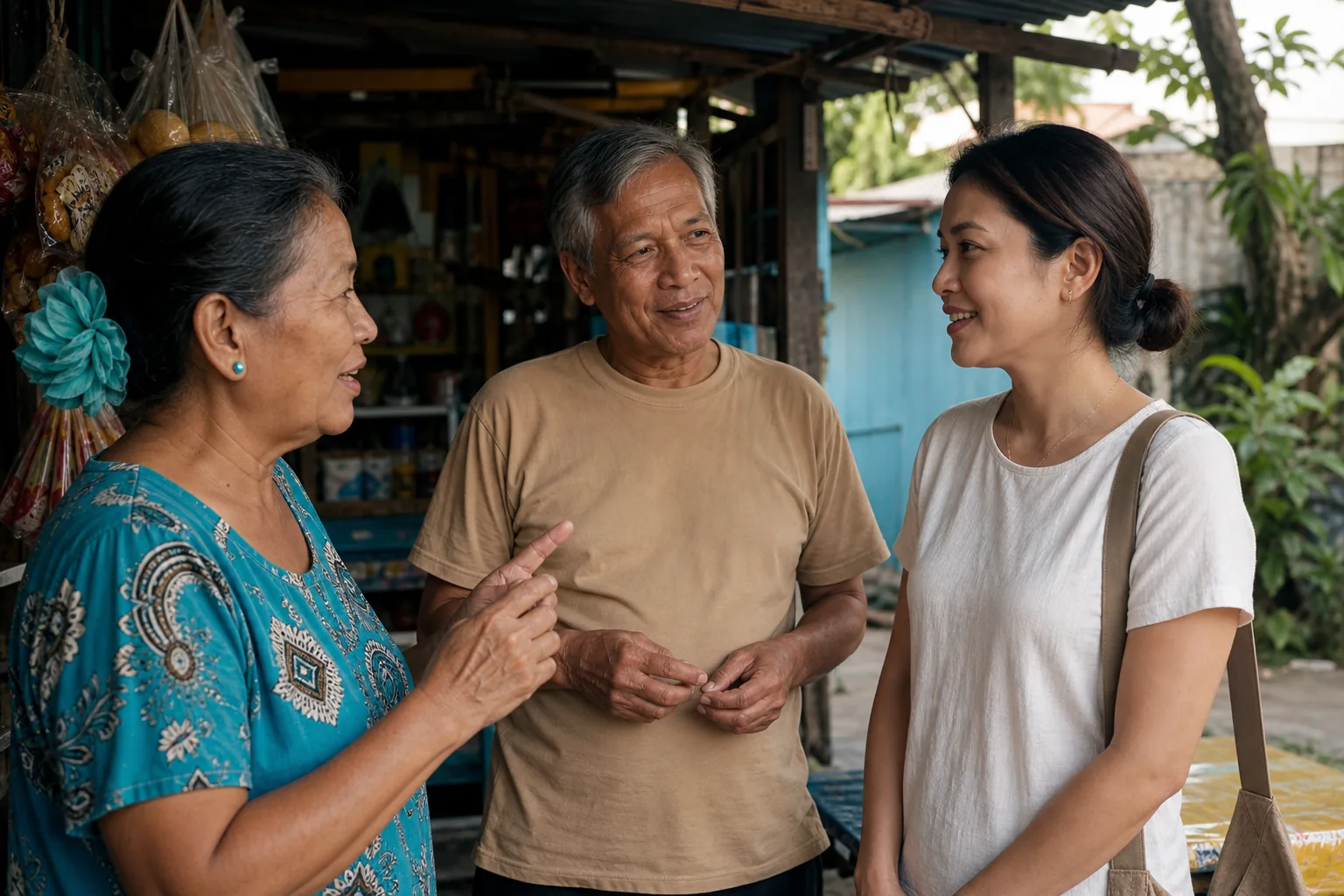
Every language has a handful of words that do 80% of the social work. In Cebuano — the Bisaya language of Cebu, Bohol, and much of the southern Philippines — these are the ones to learn first, and the culture that comes with them.
"Hello" doesn't quite exist — and that's fine
Cebuano has no exact one-word "hello." What people actually say:
- Maayong buntag — good morning (until about 11 a.m.)
- Maayong udto — good noon (11 a.m. – 1 p.m., yes it's a real slot)
- Maayong hapon — good afternoon
- Maayong gabii — good evening
- Maayong adlaw — good day, any time
The all-purpose greeting between people who know each other is simply:
Kumusta ka? — How are you?
The standard reply: Maayo man ko, salamat — ikaw? ("I'm fine, thanks — you?"). In the provinces you'll also get the wonderfully practical greeting "Asa ka padulong?" ("where are you heading?") — it's friendliness, not surveillance, and "Diha ra sa unahan" ("just up ahead") is answer enough.
Thank you: salamat and its upgrades
- Salamat — thank you
- Daghang salamat — many thanks
- Daghang salamat kaayo — thank you very, very much
- Walay sapayan — you're welcome (literally "it's nothing")
Kaayo ("very") is the great Cebuano intensifier — you'll hear it stuck onto everything: lami kaayo (so delicious), init kaayo (so hot), gwapa kaayo (so beautiful).
Please, sorry, excuse me
- Palihog — please. Put it in front of any request: Palihog og tubig ("water, please").
- Pasayloa ko — forgive me / I'm sorry (for real apologies).
- Pasensya na — sorry / bear with me (for small stuff — being late, bumping someone).
I love you: gihigugma tika
The Cebuano word for love is gugma, and the sentence every learner wants:
Gihigugma tika. — I love you.
Tika is a neat contraction meaning "I…you," so the whole sentence lives in two words. Colloquially you'll also hear the English-mixed "Lab tika" — Bisaya humor at work. Terms of endearment run on langga / ga (dear), from palangga (beloved).
Say it early, and a Cebuano may tease you with "Duhaduha pa ko nimo" — "I still have my doubts about you."
Saying goodbye
- Adto na ko — I'm going now (the standard leave-taking)
- Amping! — take care! (the reply to anyone leaving)
- Magkita ra ta unya — see you later
- Padayon! — carry on / keep going (also the Visayan word for perseverance)
The cultural fine print
Two habits make greetings land better in the Visayas:
- Smile and raise your eyebrows. The quick eyebrow flash is a greeting in the Philippines — combined with kumusta, you're fluent in hello.
- Add "po"? No — that's Tagalog. Cebuano doesn't use po/opo for politeness. Respect is carried by tone, by palihog and salamat, and by addressing elders as Nong (from Manong) or Nang (Manang).
Ready for more than pleasantries? Move on to the full traveler phrase list, learn to count in Cebuano, or dive into the dictionary and look up your first word — may we suggest higala, "friend"?