"Cebuano vs Tagalog: What's the Difference?"
Published July 16, 2026
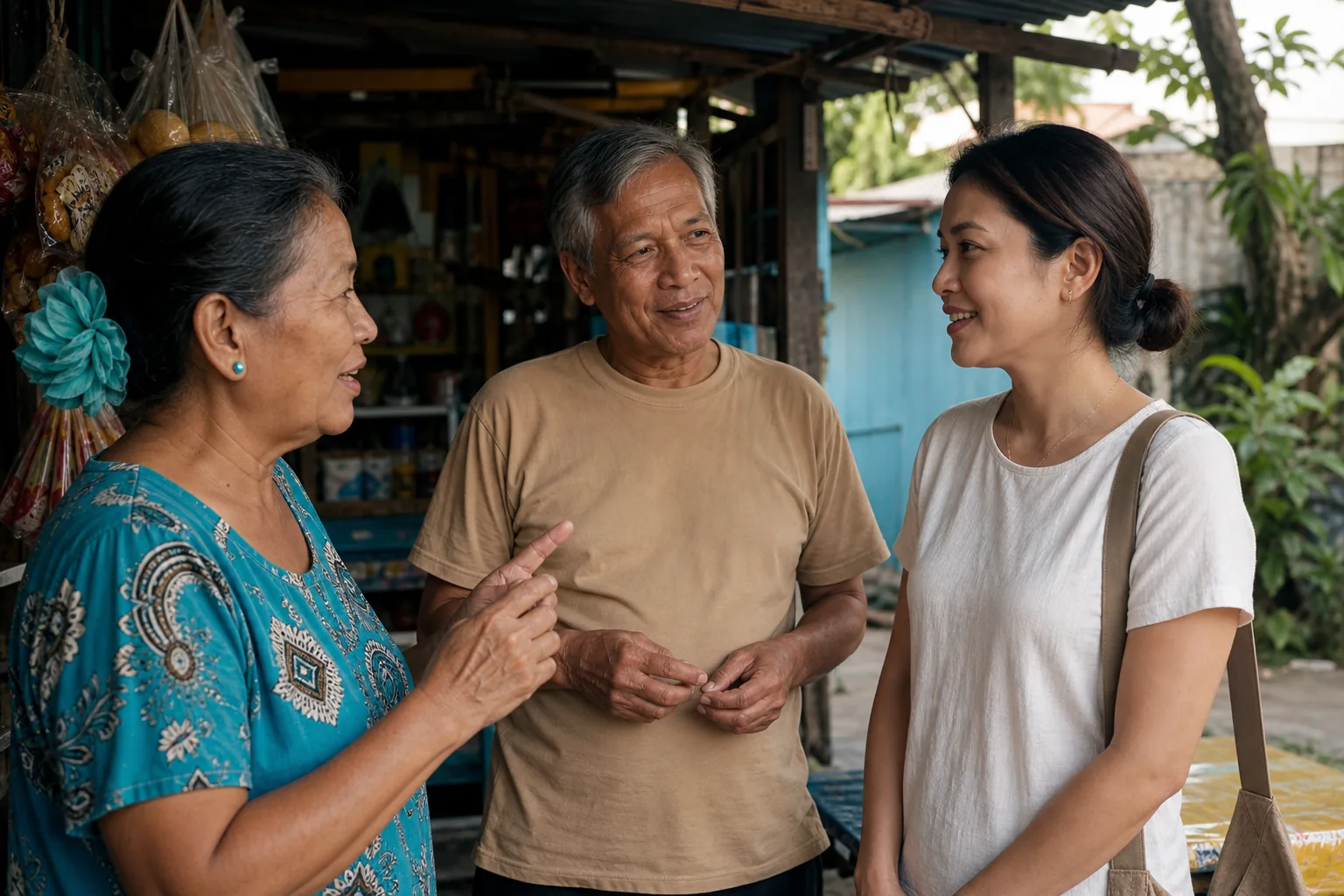
First-time visitors to the Philippines often assume everyone speaks "Filipino" — and are surprised to learn that in Cebu, Bohol, and most of Mindanao, the everyday language isn't Tagalog at all. It's Cebuano, known to its speakers as Bisaya.
Two languages, not two dialects
Cebuano and Tagalog are both Austronesian languages of the Philippines, and they share plenty of family resemblance: similar sound systems, the plural marker mga, Spanish loanwords everywhere, and verb-first sentence patterns. But they are separate languages, not dialects of each other — a Tagalog speaker from Manila cannot follow a conversation in Cebuano without study, and vice versa.
- Tagalog is the language of Manila and southern Luzon, and the basis of Filipino, the national language taught in every school.
- Cebuano is the language of the Central Visayas (Cebu, Bohol, Negros Oriental, Siquijor), western and southern Leyte, and huge parts of Mindanao, with roughly 20 million speakers.
Because Filipino is taught nationwide, most Cebuano speakers understand Tagalog — but the reverse is rarely true, and in Cebu you'll win far more goodwill with salamat delivered after a genuinely Bisaya sentence than with Manila Tagalog.
Same idea, different words
The fastest way to feel the difference is a side-by-side list:
| English | Tagalog | Cebuano |
|---|---|---|
| Good morning | Magandang umaga | Maayong buntag |
| Beautiful | Maganda | Gwapa |
| Delicious | Masarap | Lami |
| Where? | Saan? | Asa? |
| What? | Ano? | Unsa? |
| Why? | Bakit? | Ngano? |
| No / not | Hindi | Dili |
| None | Wala | Wala |
| House | Bahay | Balay |
| Water | Tubig | Tubig |
| Day / sun | Araw | Adlaw |
| Money | Pera | Kuwarta |
| To eat | Kain | Kaon |
| I love you | Mahal kita | Gihigugma tika |
Notice the pattern: some words are identical (tubig, wala, mga), some are clearly cousins (araw / adlaw, bahay / balay), and some are completely different (bakit / ngano, maganda / gwapa).
One famous trap: mahal. In Tagalog mahal means both "expensive" and "beloved." In Cebuano, mahal mostly just means expensive — tell someone "mahal ka" in Cebu and you may be commenting on their price tag. Love in Cebuano is gugma, and "I love you" is gihigugma tika.
Grammar: familiar shape, different parts
If you've studied any Tagalog, Cebuano grammar will feel structurally familiar:
- Predicate first. "The food is delicious" → Lami ang pagkaon (Cebuano) / Masarap ang pagkain (Tagalog).
- Markers, not word order, carry the grammar: Cebuano ang/si, og/ug, sa play roles similar to Tagalog ang/si, ng, sa.
- Verb affixes mark focus and aspect in both languages, though the actual affixes differ (Cebuano leans on mo-, mi-, nag-, gi-).
- Existence: Tagalog may/mayroon vs Cebuano adunay/naay — Naa koy kuwarta ("I have money").
Cebuano is often described by learners as slightly easier to start speaking: fewer verb conjugation patterns get you conversational, and Cebuanos are famously encouraging to anyone who tries.
Which should you learn?
- Staying in Manila, Luzon, or planning to work nationwide? Learn Tagalog/Filipino — it's the lingua franca and every Filipino understands it.
- Headed to Cebu, Bohol, Dumaguete, Siquijor, Davao, or Cagayan de Oro? Learn Cebuano. It's the language of daily life for the people you'll actually meet.
- Doing both? Learn greetings in each — the vocabulary overlap means the second language comes faster.
Start with our 60+ essential Cebuano phrases, then look up anything you hear in the free Cebuano–English dictionary — nearly 7,000 words with English meanings and original Cebuano definitions.