"Visayas and Mindanao Delicacies: A Regional Food Guide with Cebuano Words"
Published July 25, 2026
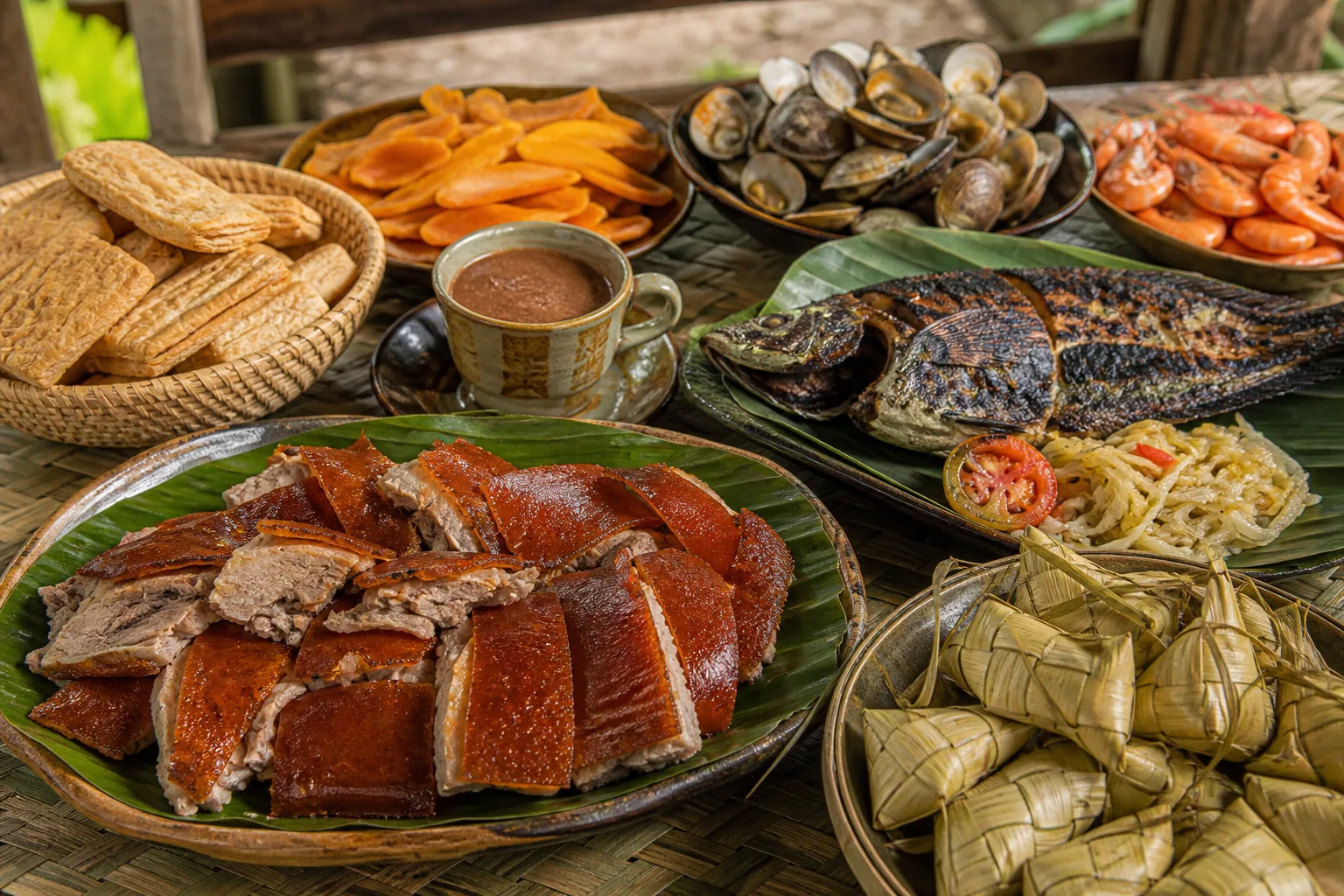
Every province in the Visayas and Mindanao has a specialty worth crossing an island for. Some are heavy meals, others are sweets wrapped in banana leaves and sold from baskets at the bus terminal. This guide covers the delicacies you should know — with the Cebuano words that help you ask for them, describe them, and bring them home as pasalubong.
Cebu
The island best known for litson (roasted pig) is also a powerhouse of sweets and snacks.
- Dried mangoes — Cebu's most famous export. Made from ripe mangga, dried to a chewy, intensely sweet strip. Sold everywhere from the airport to Carbon Market.
- Tableya — cacao tablets made from ground, roasted cacao beans. Dissolve in hot water to make traditional sikuwate (hot chocolate), whisked with a batirol until frothy.
- Otap — a flaky, oval-shaped cookie dusted with sugar. Originates from Carcar and Mandaue.
- Rosquillos — ring-shaped cookies from Liloan, Cebu. Buttery, crumbly, and famously associated with the Titay's bakery since 1907.
- Masareal — a dense, sweet bar made from ground peanuts and sugar. Popular in Mandaue.
- Ampaw — puffed rice molded with sugar or caramel, crisp and airy.
- Chicharon — deep-fried pork rind, with the Carcar version being the most celebrated. Best eaten with suka (vinegar) and puso (rice in a woven coconut-leaf pouch).
- Puto — steamed rice muffins, often paired with sikuwate for puto maya — a classic Cebuano breakfast of purple glutinous rice and hot chocolate.
Words to use: Tagpila ang usa ka pack? (How much for one pack?), Lami kaayo! (So delicious!), Panghatag ko, palihog. (Give me some, please.)
Bohol
An hour's ferry from Cebu, Bohol's delicacies lean heavily on coconut and peanut.
- Kalamay — a sticky, sweet paste made from glutinous rice or cassava, coconut milk, and sugar. Bohol's version is sold in smooth coconut-shell halves (kalamay sa latik) and sealed with a red crepe-paper lid.
- Peanut kisses — a bite-sized cookie made from peanuts and egg whites, shaped like the Chocolate Hills. The province's most recognizable pasalubong.
Words to use: Asa ang kalamay? (Where is the kalamay?), Usa ana, palihog. (One of that, please.)
Negros Occidental (Bacolod)
Negros is sugar country, and the local sweets reflect it. The island is also the birthplace of a grilled chicken that has become a national obsession.
- Piaya — a flat, toasted unleavened bread filled with muscovado sugar. Warm, straight from the griddle, it is unforgettable. The version from Bongbong's is the benchmark.
- Napoleones — layers of puff pastry filled with custard and topped with a sugar glaze. A Bacolod specialty.
- Chicken inasal — chicken marinated in vinegar, calamansi, lemongrass, and ginger, then grilled over charcoal. Served with garlic rice and a side of chicken oil. The Manokan Country row in Bacolod is the place to try it.
- Batchoy (La Paz) — though associated with Iloilo (see below), Bacolod has its own worthy versions of this noodle soup of pork organs, crushed chicharon, and a raw egg cracked on top.
Words to use: Init pa? (Still hot/warm?), Isda? — asking if the inasal is chicken or fish (some places offer both).
Iloilo
Iloilo's food is one of the most distinct in the Visayas — soulful broths, delicate sweets, and a pancit unlike any other.
- La Paz Batchoy — the original version, from the La Paz district. A bowl of miki noodles in a rich pork-and-beef broth, topped with sliced pork, liver, crushed chicharon, and a raw egg. Best eaten at the La Paz Public Market.
- Biscocho — toasted bread slices coated in butter and sugar. Crisp, sweet, and sold in clear plastic jars.
- Barquillos — thin, rolled wafers, sometimes filled with polvoron or left hollow. A delicate, crumbly snack.
- Pancit Molo — pork-filled wontons in a chicken broth, topped with green onions and garlic. Named after the Molo district of Iloilo City.
Leyte
Leyte's sweets are wrapped in leaves, steamed, and carried by hand onto buses and ferries.
- Binagol — a sweet made from mashed talyan (a type of root crop), coconut milk, sugar, and egg yolk, packed into a coconut shell and sealed with banana leaves. From Dagami, Leyte.
- Moron — glutinous rice and chocolate (tableya) rolled in banana leaves and steamed. The chocolate-and-white-swirled log is called moron, while the plain glutinous rice version is suman.
- Sagmani — a layered cassava cake steamed in banana leaves, with coconut cream on top.
Words to use: Pangpasalubong ni. (This is for pasalubong / bringing home.)
Samar
Samar's cuisine often centers on coconut and cassava, reflecting the island's terrain.
- Tamalos — a Samar-style tamale made from ground rice, coconut milk, and sometimes peanuts, wrapped and steamed in banana leaves.
- Balanghoy (cassava) cakes — grated cassava mixed with coconut and sugar, steamed or baked. Many households have their own recipe.
Mindanao: Davao, Zamboanga, and beyond
Mindanao is the Philippines' fruit basket, and the markets show it.
Davao
- Durian — the king of fruits. Creamy, pungent, and an object of obsession. Fresh durian is available in Davao markets from August to November. Also sold as durian candy, durian jam, and durian coffee.
- Mangosteen — the queen (in local shorthand). A purple fruit with white segments inside, cool and mildly sweet. Vendors will recognize the English name.
- Pomelo — a large citrus fruit, sweeter and less acidic than grapefruit, with thick skin and pink flesh.
- Marang — a fruit related to breadfruit and jackfruit. When ripe, the soft white pulp around each seed has a creamy, sweet taste.
Zamboanga
- Curacha — a deep-sea crab found in the waters off Zamboanga. Often steamed or cooked in a chili-coconut sauce. More meat than the common alimango.
- Satti — skewers of grilled beef or chicken served with a spicy, turmeric-red soup. Breakfast in Zamboanga City.
- Lokot-lokot — a crunchy, noodle-like fried sweet made from rice flour. Golden, delicate, and sold in rounds.
Sweets you will find everywhere
Some delicacies cross provincial lines and show up in every Visayan and Mindanaoan market:
- Budbod — glutinous rice and coconut milk rolled in banana leaves and steamed. Elongated, not round.
- Biko — glutinous rice cooked in coconut cream and sugar, served in diamond-cut squares.
- Binignit — a warm glutinous-rice porridge with coconut cream, root crops, saba bananas, and tapioca pearls. Eaten during Holy Week but available year-round in carinderias.
- Turon — sliced saba banana coated in caramelized brown sugar and wrapped in a lumpia wrapper, then fried. Sold by street vendors.
- Tsamporado — chocolate rice porridge, best eaten with dried salted fish on the side.
- Letseplan — caramel custard, the Filipino version of leche flan. Silky, sweet, and served at fiestas.
How to describe what you taste
| Cebuano | English |
|---|---|
| Lami! | Delicious! |
| Tam-is | Sweet |
| Aslom | Sour |
| Halang | Spicy / hot |
| Pait | Bitter |
| Parat | Salty |
| Lamaw | Bland |
How to order, buy, and ask
| Cebuano | English |
|---|---|
| Tagpila ni? | How much is this? |
| Unsa ni? | What is this? |
| Palihog ko ug usa. | Please give me one. |
| Pangpasalubong. | For pasalubong (souvenir/gift to bring home). |
| Asa ta makaon ug lami? | Where can we eat good food? |
| Unsa imong ika-rekomendar? | What do you recommend? |
The best way to eat through the Visayas and Mindanao is to ask the person next to you what they are having — and order the same. Bring a few Cebuano food words, and you will be pointed toward plates you would otherwise miss. If you are planning a trip, start with the Cebu travel guide and the guide to eating in Cebu, then browse the Cebuano-English dictionary for every food word you encounter.