"Getting Around Cebu: Taxis, Buses, Jeepneys, and Useful Words"
Published July 18, 2026
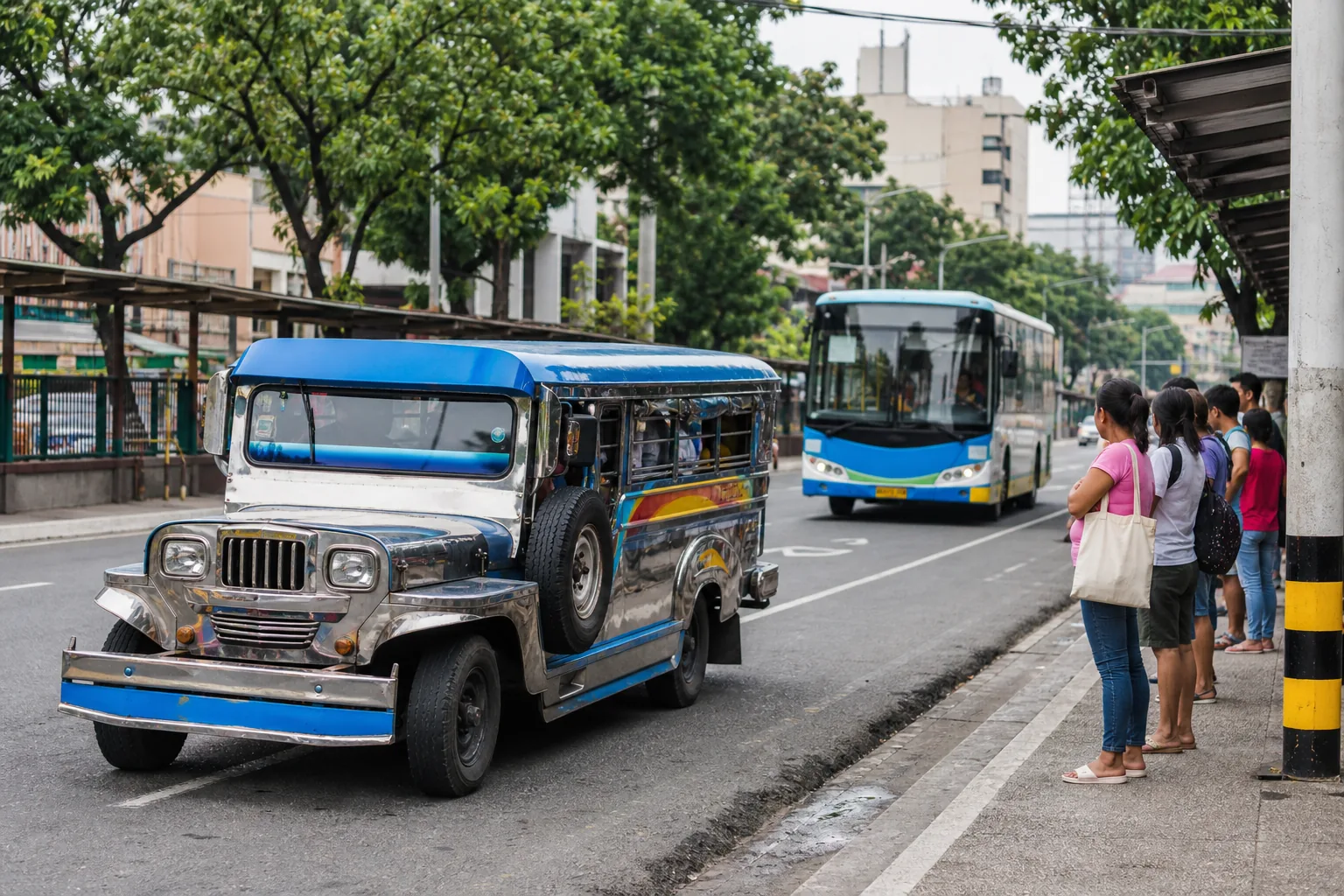
Cebu transport is a mix of taxis, app-based rides, modern buses and minibuses, traditional jeepneys, provincial buses, ferries, and motorcycle taxis. The best option depends on your route, luggage, time, and comfort level.
Taxis and app-based rides
For a first trip, confirm the destination before moving and keep the route visible on your phone. Use a recognised pickup area where possible.
- Dinhi lang. — Just here.
- Asa ta moagi? — Which way are we going?
- Pila ang plete? — How much is the fare?
Traffic can turn a short distance into a long ride, particularly when crossing between Mactan, Mandaue, and Cebu City.
Jeepneys and modern minibuses
Jeepney routes are usually shown on signs at the front and sides. Before you sakay (board), ask:
Moagi ni sa ___? — Does this pass by ___?
Carry small bills and coins. When you need to get off, “Lugar lang!” or “Dinhi lang!” asks the driver to stop. If you are unsure, show another passenger the place on your map and ask “Asa ko manaog?” — Where should I get off?
Travelling north or south
Longer trips use different terminals and may involve a bus, van, or ferry connection. Confirm the terminal for your destination on the day, especially when going to Moalboal, Bantayan, Camotes, Malapascua, or southern Cebu.
Do not assume every place called “Cebu” is close to Cebu City. The province stretches far north and south, and island transfers add another leg.
Weather can change the plan
Heavy ulan (rain) and sea conditions can disrupt road and ferry travel. Check official local and operator advisories instead of relying on an old timetable or social post. The Cebu Provincial Tourism Office is a useful starting point for official destination information.
For the words you will use most often, read the essential Cebuano phrases for travellers and keep the dictionary open while you move around.